
Every GTA 6 trailer shot of Vice Beach at night lands the same way: pastel facades going dark, then a vertical neon spine flickering on above a hotel entrance while palm trees cut black silhouettes against the glow. That look isn’t a Rockstar invention. It’s a close read of one real place, Miami Beach’s Art Deco Historic District, a strip of 1930s hotels that nearly got bulldozed before a small group of preservationists saved it. Here’s what the real district actually is, what Rockstar’s official material shows, and where the two line up (and where the comparison is just community guesswork).
Key Takeaways
- The real Art Deco Historic District was listed on the National Register of Historic Places on May 14, 1979, covering 800 contributing buildings, the first 20th-century urban district ever listed.
- The pastel color scheme everyone associates with Ocean Drive wasn’t original. Designer Leonard Horowitz painted the district in a 40-color palette in the early-to-mid 1980s, decades after the buildings went up in white.
- Rockstar’s own official screenshots show a building with vertical signage reading “DIXON,” an odd echo of L. Murray Dixon, one of the real district’s core Art Deco architects. Whether that’s intentional is unconfirmed.
- No Rockstar Newswire post or official interview has named Miami’s Art Deco district as a design reference. Every “Vice Beach is based on Ocean Drive” comparison online, including several named hotel matches, comes from press and fan analysis, not Rockstar.
- The real district isn’t just a tourist backdrop right now. Florida’s 2025 “Live Local Act” fight put roughly 1,800 historic Miami Beach buildings at risk of redevelopment before a last-minute amendment restored some review protections.
| Architectural feature | Real Ocean Drive (Miami Beach) | GTA 6 Vice Beach (official material) |
|---|---|---|
| Building style | Streamline Moderne / “Tropical Deco,” built 1930s to early 1940s | Same curved-corner, stepped silhouette visible throughout official trailers and screenshots |
| Signature color | Original buildings were white; the pastel palette was added in the early-to-mid 1980s by designer Leonard Horowitz | Pastel daytime facades and neon-lit night scenes shown in official material |
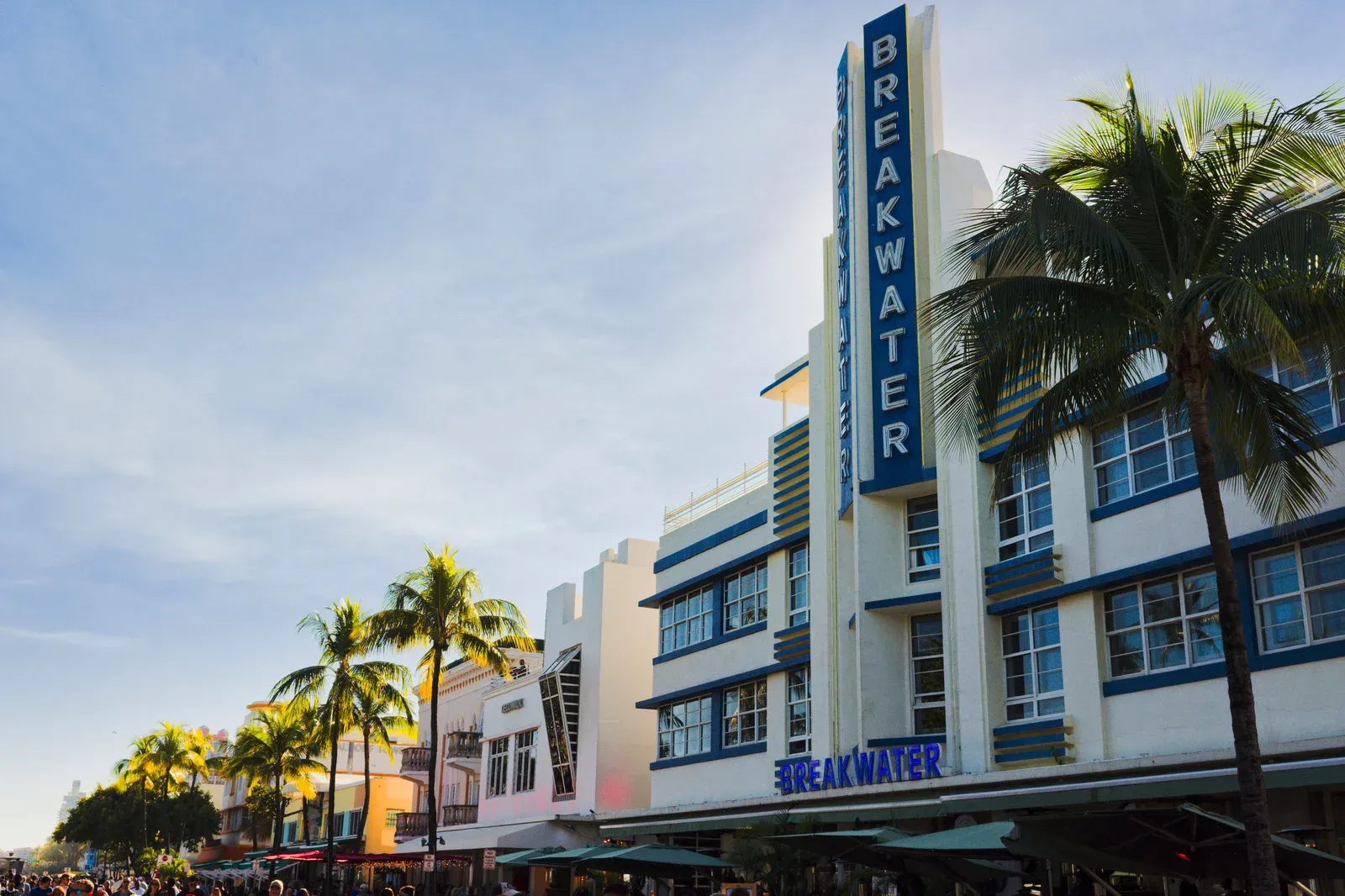
| Vertical signage | Tall neon “spine” signs run the full height of hotel facades, for example the Colony and Breakwater hotels | Matching vertical spine signage visible in official screenshots, including one reading “DIXON” |
| Roofline and window details | Stepped ziggurat rooflines, porthole windows, “eyebrow” ledges over windows | Same stepped, porthole-and-eyebrow silhouette visible in official screenshots |
| Real-world recognition | 800 buildings listed on the National Register of Historic Places since 1979 | No Rockstar statement confirms the district as a direct design reference |
What Makes Ocean Drive’s Real Architecture So Distinctive?
Status: Confirmed. Miami Beach’s Art Deco Historic District became the first urban 20th-century historic district listed on the National Register of Historic Places, designated May 14, 1979, and covering 800 contributing buildings (Miami Design Preservation League, retrieved 2026-08-15). That listing almost didn’t happen. Activist Barbara Baer Capitman moved to Miami Beach in 1973, co-founded the Miami Design Preservation League in 1976, and became known for physically standing in front of bulldozers to stop demolitions of buildings she considered irreplaceable (Wikipedia, retrieved 2026-08-15). She originally pushed for a much bigger district, roughly 1,200 buildings, at a December 1978 Florida state hearing; the final designation came in smaller.
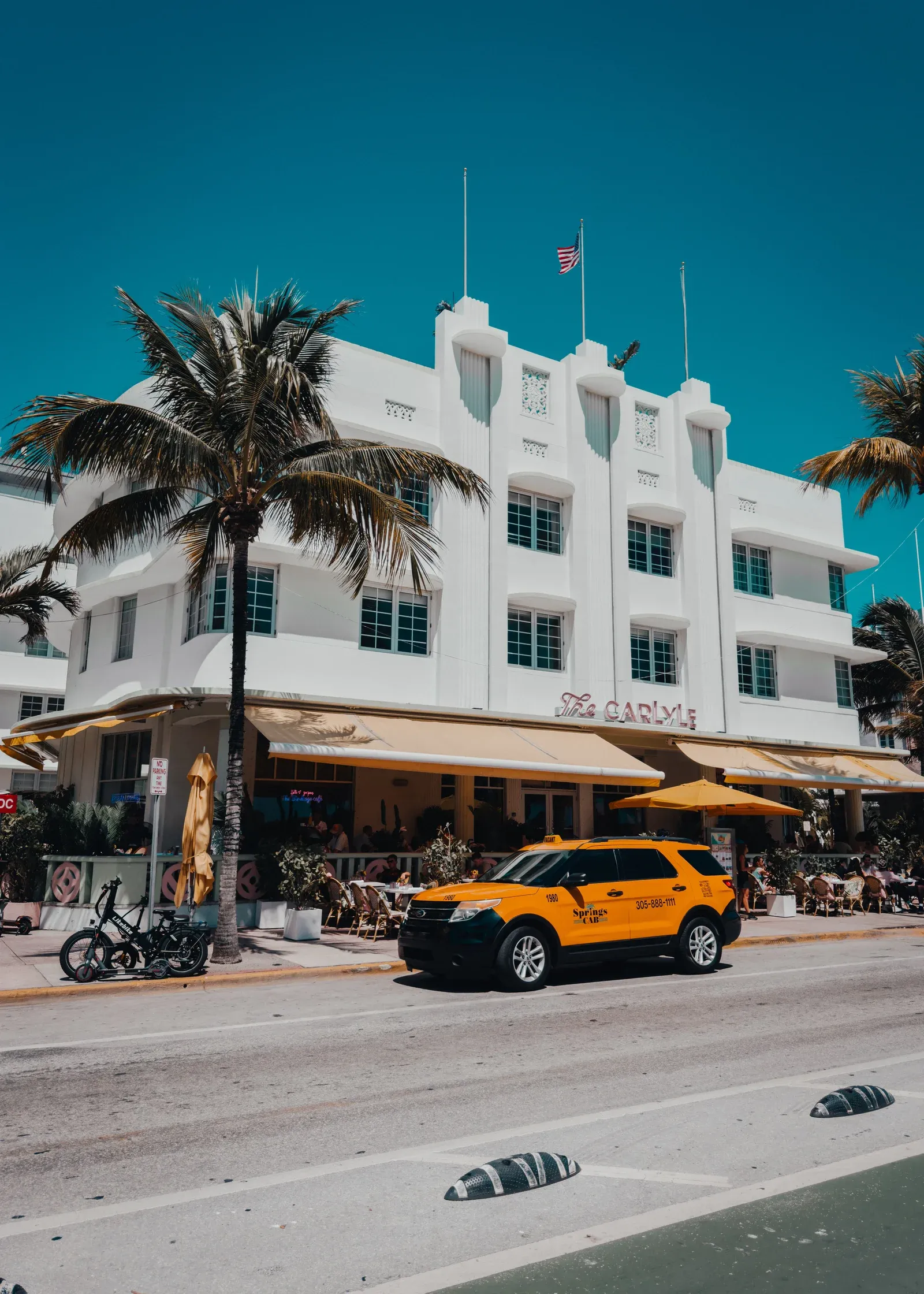
The buildings themselves are mostly Streamline Moderne, sometimes called Tropical Deco locally, built in a tight window from the 1930s through the early 1940s. The vocabulary repeats block after block: curved corners, “eyebrow” ledges shading the windows, porthole windows borrowed from ocean liners, stepped ziggurat rooflines, and terrazzo floors in the lobbies. A handful of architects designed most of it. Henry Hohauser is credited with the Cardozo (1939), the Greystone (1939), and the Park Central (1937); Albert Anis designed the Majestic (1940) and the Avalon (1941); L. Murray Dixon is counted among the small group of core architects who defined the strip’s look (Wikipedia, Park Central South Beach, retrieved 2026-08-15).
For a full overview of every confirmed region on GTA 6’s map, see our complete guide to the Leonida map.
Where Did Ocean Drive’s Pastel Colors and Neon Actually Come From?
Status: Confirmed. The pastel palette everyone photographs on Ocean Drive today wasn’t part of the original 1930s design. The buildings went up mostly white, with restrained trim. In the early to mid-1980s, MDPL co-founder Leonard Horowitz devised a 40-color palette specifically to draw attention to the district’s Art Deco detailing and pull focus away from the urban decay surrounding it at the time. Horowitz described the palette’s source directly: it was based “on the basis of sunset, sunrise, the summer and winter oceans and the sand on the beach” (Miami Design Preservation League, WLRN, retrieved 2026-08-15). The city later co-named 11th Street and a stretch of Ocean Drive “Leonard Horowitz Place” in his honor.
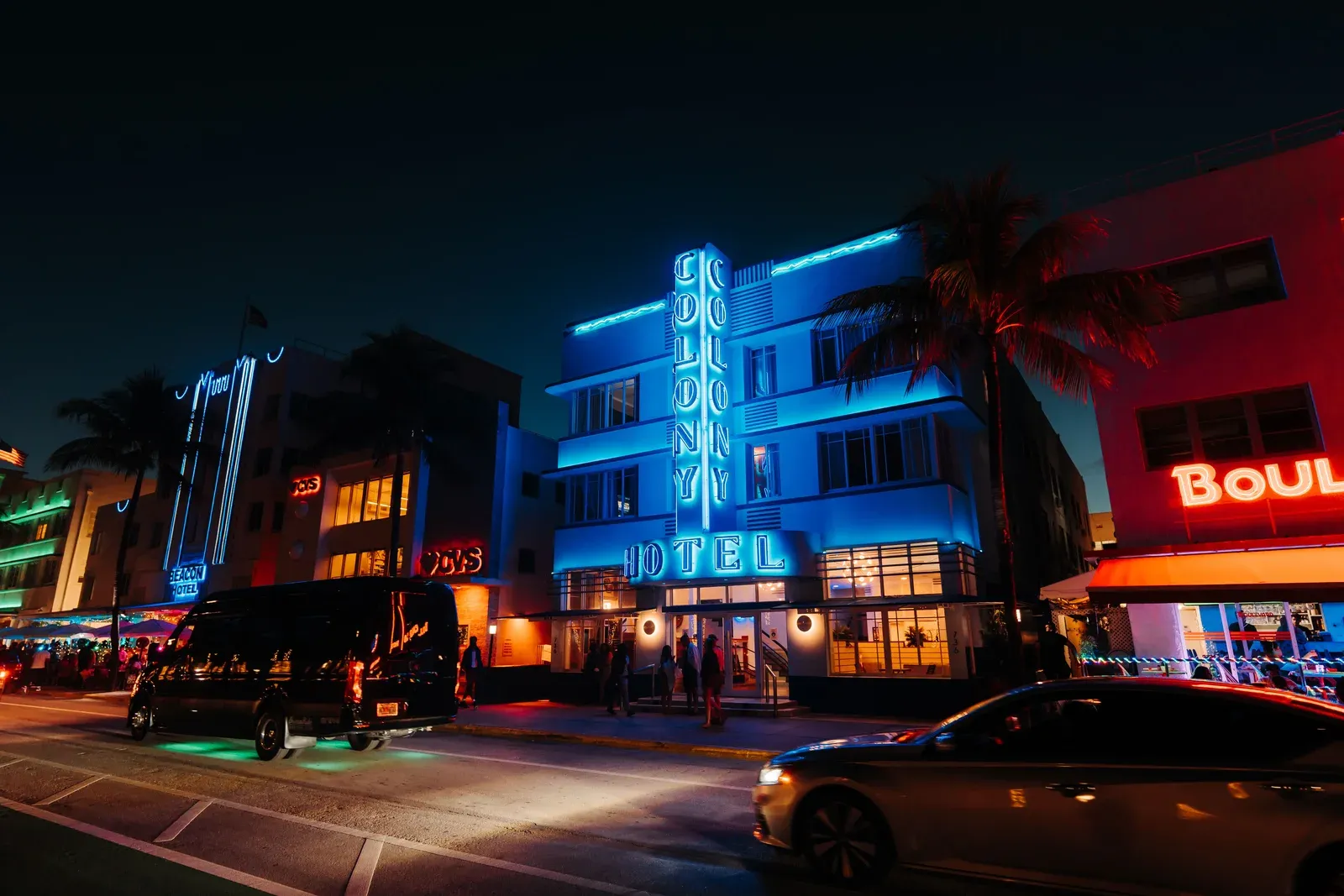
That vertical neon spine, a sign running the full height of a building’s facade rather than sitting flat above the entrance, became the district’s signature nighttime feature and is the single most recognizable element GTA 6’s trailers borrow. Combined with the porthole windows and eyebrow ledges, it’s what turns a plain three or four-story building into something instantly identifiable after dark.
Key dates in the Art Deco Historic District’s history, the real timeline behind Vice Beach’s neon look. Sources: Miami Design Preservation League and City of Miami Beach (retrieved 2026-08-15).
What Does GTA 6’s Trailer Footage Actually Show?
Status: Confirmed. Rockstar has released two official trailers so far: the first on December 4-5, 2023, confirming the Vice City/Leonida setting and protagonist Lucia Caminos (CNN), and the second on May 6, 2025, reuniting Lucia with Jason Duval after her release from prison (CBS News). Both trailers include nighttime shots of a strip of Art Deco-style buildings lit in multicolored neon, running along a palm-lined boulevard next to a boardwalk, a look you can watch directly in the official footage without any outside interpretation needed.
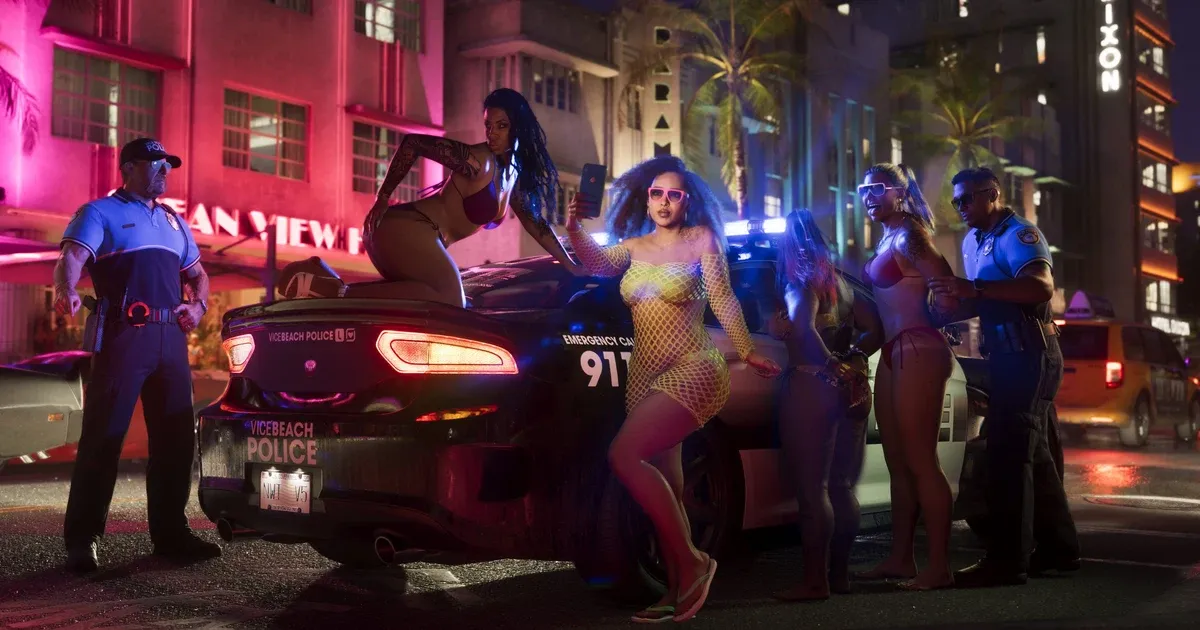
Look closely at Rockstar’s own official screenshots of this strip and two pieces of signage stand out. A pink neon sign partially reads “…EAN VIEW H…,” consistent with “Ocean View Hotel.” A separate building carries vertical lettering reading “DIXON.” Both are directly visible in Rockstar-published material, no fan editing or zoom trickery involved. What those names refer to, and whether either is a deliberate nod to something specific, is not something Rockstar has explained.
Which Real Hotels Does Vice Beach Seem to Reference?
Status: Unsourced estimate, community identification. This is where the comparison shifts from “visible in the trailer” to “somebody’s best guess.” Miami New Times built an interactive map matching 20 real Miami landmarks to GTA 6 locations, and identified a “Hotel Boardwalk” in-game as a renamed stand-in for the real Breakwater Hotel, and a “Hotel Dixon” as a stand-in for the real Hotel Victor, while also noting that the pink “Ocean View Hotel” signage echoes the original 1990s Vice City game’s Ocean View Hotel, Tommy Vercetti’s safehouse (Miami New Times, 2025-01-13). That “Hotel Dixon” identification lines up with the “DIXON” lettering visible in Rockstar’s own screenshots, though Miami New Times is the only outlet that has published the full name-by-name match; treat it as a strong community read, not a confirmed Rockstar source.
The Dixon coincidence is worth sitting with for a second. L. Murray Dixon is one of the handful of architects credited with defining the real district’s look. A building in Rockstar’s own official screenshots reading “DIXON” could be an intentional architectural in-joke, or it could be a coincidence, or a stand-in name that just happens to overlap with a real surname. Nothing published by Rockstar settles it either way, so it stays filed as an interesting unconfirmed detail rather than a confirmed Easter egg.
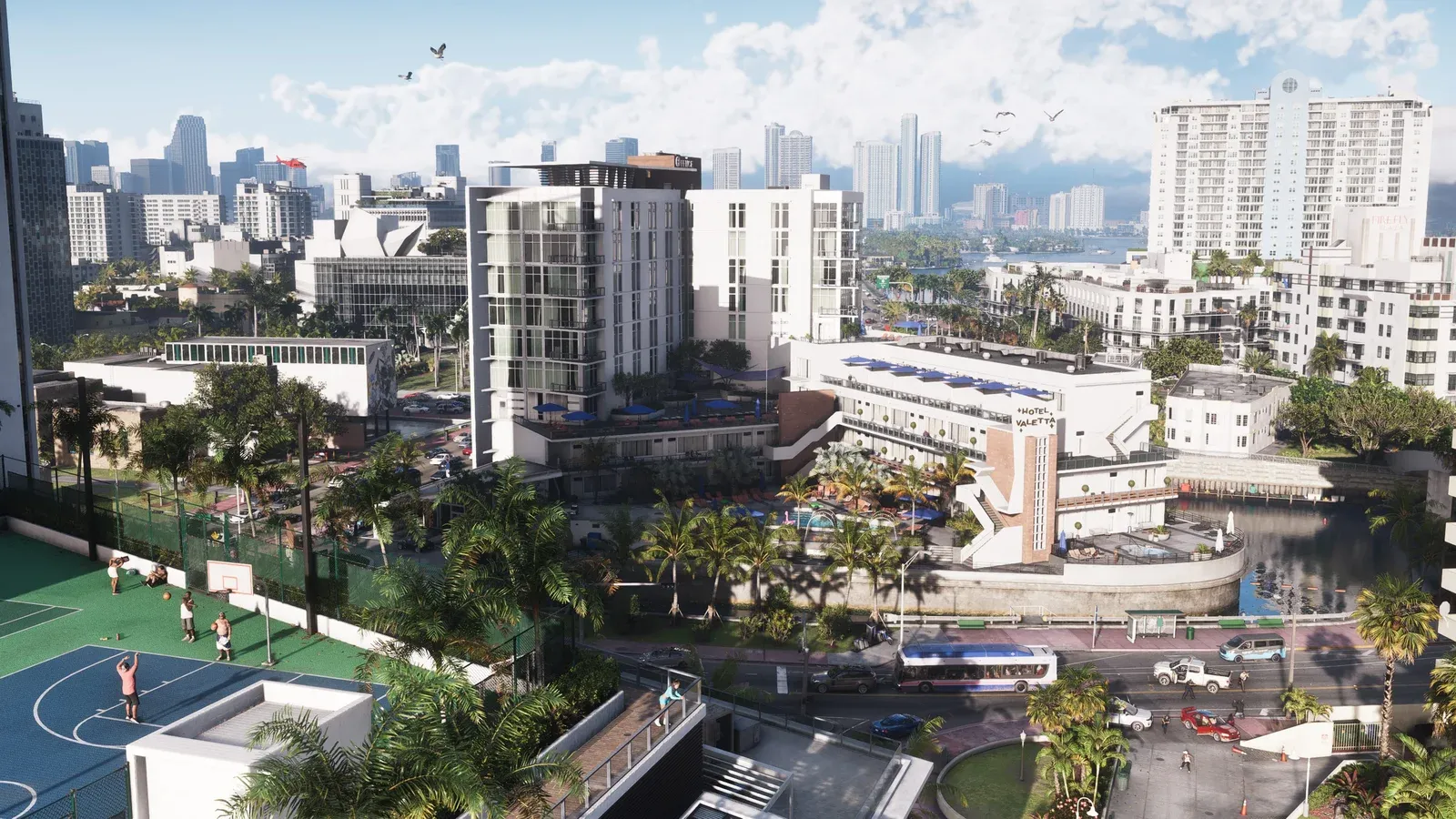
Has Rockstar Ever Confirmed the Miami Art Deco Connection?
Status: Not confirmed, absence noted, unchanged after the Extended Look. No Rockstar Newswire post, press statement, or official interview naming Miami’s Art Deco Historic District as a design reference has ever turned up for this article, and the August 27, 2026 “Extended Look” gameplay video didn’t change that. Coverage of that video confirms Vice Beach’s nightclub and interior detail runs deeper than earlier trailers showed, denser crowds, a strip club sequence, and detailed building interiors among them (TheGamer, 2026-08-27), but none of that coverage quotes Rockstar naming a real-world architectural reference. Every “Vice Beach is Ocean Drive” claim circulating, including the specific hotel name matches above, traces back to press outlets and fan analysts doing their own side-by-side comparisons of footage against real Miami photos, not to anything Rockstar has stated on the record. That distinction matters for the same reason it mattered when Rockstar’s Extended Look announcement said far less than outlets implied it would before it aired: a strong visual resemblance is not the same thing as a company confirming its sources.
What’s at Stake for the Real Ocean Drive Right Now?
Status: Confirmed. 2025 marked the 100th anniversary of Miami Beach’s Art Deco architecture, and the district spent that same year fighting off a real threat. Florida’s “Live Local Act” expansion, Senate Bill 1730 and House Bill 943, would have allowed developers to bypass local historic-board review and build towers up to 500 feet tall on roughly 2,600 historic buildings citywide, an estimated 1,800 of them Art Deco, postwar Miami Modern, or Mediterranean Revival structures (City of Miami Beach, 2025-04-28). A last-minute amendment restored some review requirements before the bill passed and was signed into law, and a further update, HB 1389, took effect July 1, 2026 (Florida Politics).
Miami Beach Mayor Steven Meiner put it plainly: “Miami Beach’s historic neighborhoods are part of our cultural identity. Once we lose our historic fabric, we won’t get it back.” Commissioner Alex Fernandez tied the stakes directly to tourism: “Art Deco is what differentiates us from every other coastal city and it’s why we are Florida’s second-largest tourist destination,” both quoted in the same city press release cited above.
Buildings protected by the district’s original 1979 listing versus historic buildings citywide exposed to 2025 redevelopment pressure. Source: City of Miami Beach (retrieved 2026-08-15).
Miami-Dade County’s tourism economy gives some sense of what’s riding on that fight, even if the figures are countywide rather than isolated to the Art Deco district itself: 28.3 million visitors and a $32.2 billion total economic impact in 2025, about 8% of county GDP (Greater Miami Convention & Visitors Bureau, via Hotel News Resource, 2026-06-05). Ocean Drive’s neon strip is a large part of what that tourism sells.
Frequently Asked Questions
Is GTA 6’s Vice Beach based on the real Ocean Drive?
Visually, yes, official trailer and screenshot material shows the same neon vertical signage, pastel Streamline Moderne facades, and palm-lined boulevard as the real Art Deco Historic District. Rockstar itself has never confirmed the district as a specific design reference, so treat the connection as strongly evidenced but unofficial.
What architectural style are the hotels on the real Ocean Drive?
Mostly Streamline Moderne, sometimes called Tropical Deco locally, built between the 1930s and early 1940s by architects including Henry Hohauser, Albert Anis, and L. Murray Dixon. Signature features include curved corners, eyebrow window ledges, porthole windows, and stepped ziggurat rooflines.
Were Ocean Drive’s buildings always pastel-colored?
No. The original 1930s buildings were mostly white with restrained trim. Designer Leonard Horowitz introduced the now-famous 40-color pastel palette in the early-to-mid 1980s to highlight the district’s Art Deco detailing.
Is the real Art Deco district at risk of demolition?
It faced a serious threat in 2025 when Florida’s Live Local Act expansion would have allowed towers up to 500 feet on historic sites without local review. A last-minute amendment restored some protections before the bill was signed into law, and a further update took effect July 1, 2026.
Ocean Drive’s neon isn’t set dressing Rockstar invented from nothing. It’s a fairly faithful nod to a real strip of buildings that a handful of preservationists fought to save, then a graphic designer repainted, and that Florida lawmakers nearly opened up to demolition the same year Rockstar was still finishing the game. For more on how Vice City fits together, see our guides to Ambrosia and Port Gellhorn, or track every confirmed detail on the road to launch with our GTA 6 release date tracker.